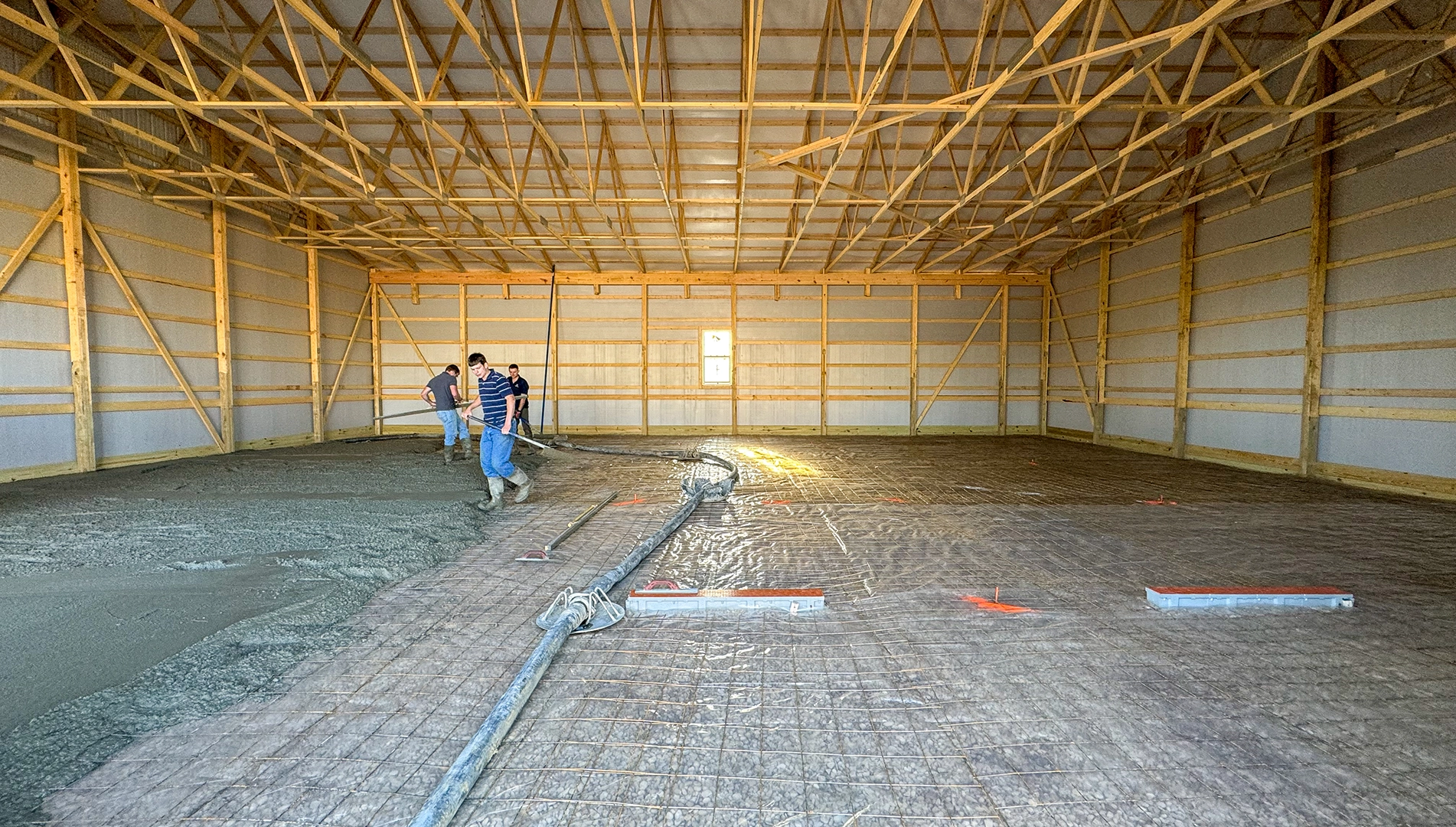
Industrial concrete is built for performance. It supports forklifts, heavy equipment, pallet traffic, agricultural loads, and long operational hours. But even the strongest slab will deteriorate prematurely if it isn’t properly protected.
When people ask how to seal a concrete industrial floor, they often assume that means applying a thick epoxy coating or glossy surface finish. In reality, long-term durability has less to do with appearance and more to do with protection, moisture control, and proper joint management.
Sealing industrial concrete is about extending the slab's life, preventing moisture intrusion, and reducing surface breakdown, not about creating a showroom finish.
Industrial floors face stress that residential surfaces never experience. Common causes of premature deterioration include:
- Moisture rising through the slab
- Chemical exposure from equipment or storage
- Freeze-thaw cycles near loading docks or exterior bays
- Abrasion from repetitive heavy traffic
- Joint failure that allows edge chipping
Without proper protection, these factors lead to cracking, spalling, surface dusting, and costly repairs.
Step 1: Start With Proper Surface Preparation
Before sealing any industrial concrete surface, preparation matters more than the product itself. Sealing over dirt, oil, or damaged areas locks in problems and shortens the life of the protection system.
Preparation typically includes:
- Removing debris and contaminants
- Cleaning oil or chemical stains
- Repairing cracks and damaged joints
- Allowing the slab to dry fully before application
Industrial slabs must be structurally sound before any sealer is applied. Sealing is not a substitute for repair.
Step 2: Choose the Right Type of Sealer
Since Anchor Crete does not install epoxy coating systems, the focus for industrial concrete sealing is on penetrating sealers and moisture-resistant protection methods.
Penetrating sealers soak into the concrete and provide internal protection without creating a surface film. These are often the most practical option for industrial environments because they:
- Reduce water absorption
- Protect against freeze-thaw damage
- Maintain slip resistance
- Avoid peeling or flaking
- Require less long-term maintenance than surface coatings
For exterior industrial slabs or agricultural applications, penetrating protection is often more durable than topical coatings that can chip under heavy equipment.
Step 3: Protect the Joints
Concrete joints are one of the most vulnerable parts of an industrial floor. If joints are left unprotected, edges begin to chip, crack, and deteriorate quickly under repeated traffic.
Sealing an industrial floor properly includes:
- Installing the appropriate joint filler
- Ensuring joints remain flexible during temperature changes
- Preventing moisture from entering through open seams
Joint failure is one of the most common maintenance issues in large-scale facilities. Addressing joints during sealing greatly increases overall slab life.
Step 4: Consider Moisture Control
Moisture is one of the leading causes of industrial concrete problems. Even if water is not visible on the surface, vapor transmission through the slab can weaken surface strength and contribute to long-term failure.
In some cases, sealing alone is not enough. Moisture testing may be necessary to determine whether:
- Drainage improvements are required
- Sub-base issues exist
- Additional protective measures are needed
Industrial durability depends on addressing the root cause, not just surface symptoms.
Step 5: Maintain on a Schedule
Sealing is not a one-time event. Industrial environments require ongoing inspection and maintenance.
A maintenance plan should include:
- Regular joint inspection
- Monitoring high-traffic zones
- Cleaning surfaces to prevent abrasion buildup
- Reapplying penetrating sealer as recommended
Well-maintained industrial concrete can last decades. Poorly maintained slabs often require expensive patching or replacement much sooner.
Final Thoughts
When asking how to seal a concrete industrial floor, the real question is how to protect it for long-term durability. The answer lies in preparation, the right type of sealer, joint protection, and moisture management, not cosmetic coatings.
Industrial concrete is an investment. Protecting it properly reduces downtime, repair costs, and operational disruption.
If you’re managing a large facility or agricultural operation, Anchor Crete can help evaluate your slab and recommend practical protection strategies that support long-term performance.