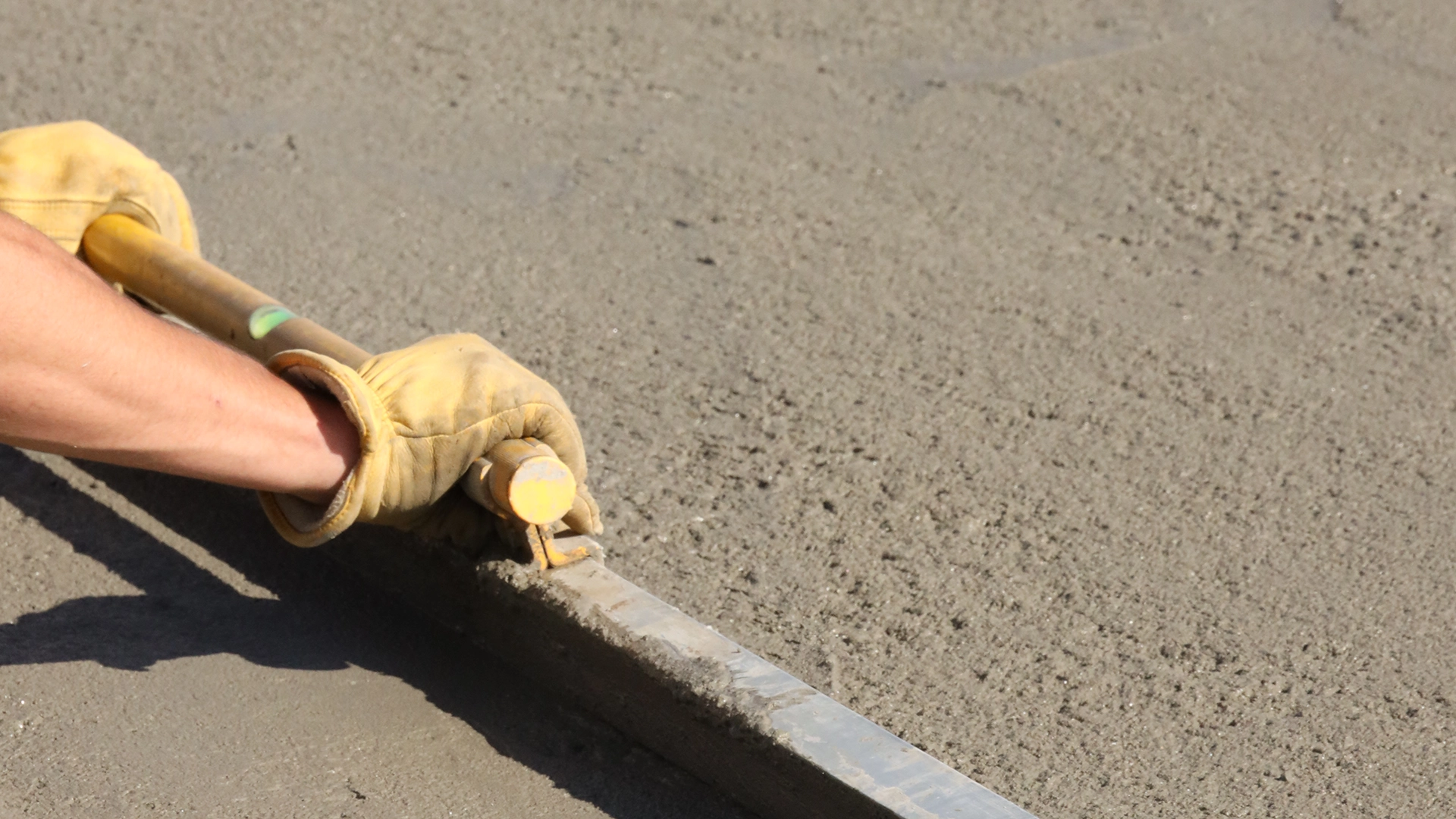
Cold weather presents unique challenges for concrete installation, and one of the most overlooked elements during winter and late-season work is joint planning. Expansion joints in concrete play a critical role year-round, but their importance increases significantly when temperatures drop.
Understanding how concrete expansion joints function and how cold weather affects them can prevent cracking, joint failure, and costly repairs down the line.
Why Concrete Needs Expansion Joints
Concrete expands and contracts with temperature changes. In warm conditions, it expands. In cold conditions, it contracts. Without planned relief points, this movement causes stress that results in cracking.
Expansion joints are intentional gaps placed in concrete to:
- Allow controlled movement
- Reduce random cracking
- Protect slab edges
- Improve long-term durability
Rather than letting concrete crack unpredictably, joints guide where movement occurs.
Cold Weather Makes Movement More Aggressive
In cold-weather installs, temperature swings are often more extreme. Concrete may be placed in moderate daytime temperatures and then exposed to freezing conditions overnight.
This rapid change increases:
- Contraction stress
- Risk of early-age cracking
- Joint edge damage
- Bond failure in poorly planned joints
Cold weather also slows curing, meaning concrete remains vulnerable to movement longer than it would in warmer conditions.
Joint Placement Becomes Even More Critical
During cold-weather installs, joint spacing and placement must be precise. Joints that are too far apart increase the likelihood of random cracking. Joints placed incorrectly may not relieve stress where it’s needed most.
Proper planning considers:
- Slab size and shape
- Thickness and reinforcement
- Expected load patterns
- Temperature exposure
- Base conditions
Skipping or minimizing joint planning in cold weather almost always leads to problems later.
Joint Fillers and Cold Conditions
Joint fillers play an important role after the concrete has cured. In cold climates, rigid fillers can crack or debond as slabs move.
Cold-weather-appropriate joint systems should:
- Remain flexible during temperature changes
- Resist moisture intrusion
- Protect joint edges from chipping
- Handle repeated expansion and contraction
Using the wrong joint filler is a common cause of joint failure in freeze-thaw environments.
Timing Matters in Cold-Weather Installs
Saw-cut timing for joints is especially important in cold conditions. Cutting too late increases the risk of uncontrolled cracking. Cutting too early can cause edge raveling.
Experienced contractors adjust timing based on:
- Air and concrete temperature
- Set rate of the mix
- Slab thickness
- Weather forecasts
This level of judgment comes from experience, not shortcuts.
Why Expansion Joints Are Preventative, Not Optional
Expansion joints are one of the most cost-effective forms of crack prevention. They don’t eliminate movement - they manage it. When designed correctly, they protect the slab and extend its usable life.
In cold-weather installs, joints are not an add-on. They are a core structural element that determines whether the slab survives winter intact.
Final Thoughts
Cold-weather concrete work requires careful planning, and expansion joints are a key part of that process. Understanding how expansion joints in concrete function during temperature swings helps prevent premature cracking, joint failure, and long-term surface damage.
Proper joint design and execution are essential for durable results that last well beyond the first freeze, whether you’re installing concrete late in the season or planning ahead for winter conditions.